
What are the actual porta potty placement rules?
There isn't one universal code that covers every yard in Greensboro. What matters on every job is ground: firm, level, and stable enough that the unit doesn't lean after a week of use. That's the same standard ADA Standards section 302.1 sets for accessible routes, and it's a good baseline even for standard units. Keep the unit within reach of a service truck; our drivers need a clear path to the door, not a maze of extension cords or parked equipment. If you're placing near a sidewalk or the street, check porta potty permit requirements before delivery day, because right-of-way placement needs confirming with the city and rules vary by street classification. For jobsites, OSHA portable toilet requirements under 1926.51(c) set the ratio of workers to units, not the physical spot on the lot. We'll walk the site with you if you're unsure, whether it's a construction site or a backyard wedding.
Where should a unit go on a construction site?
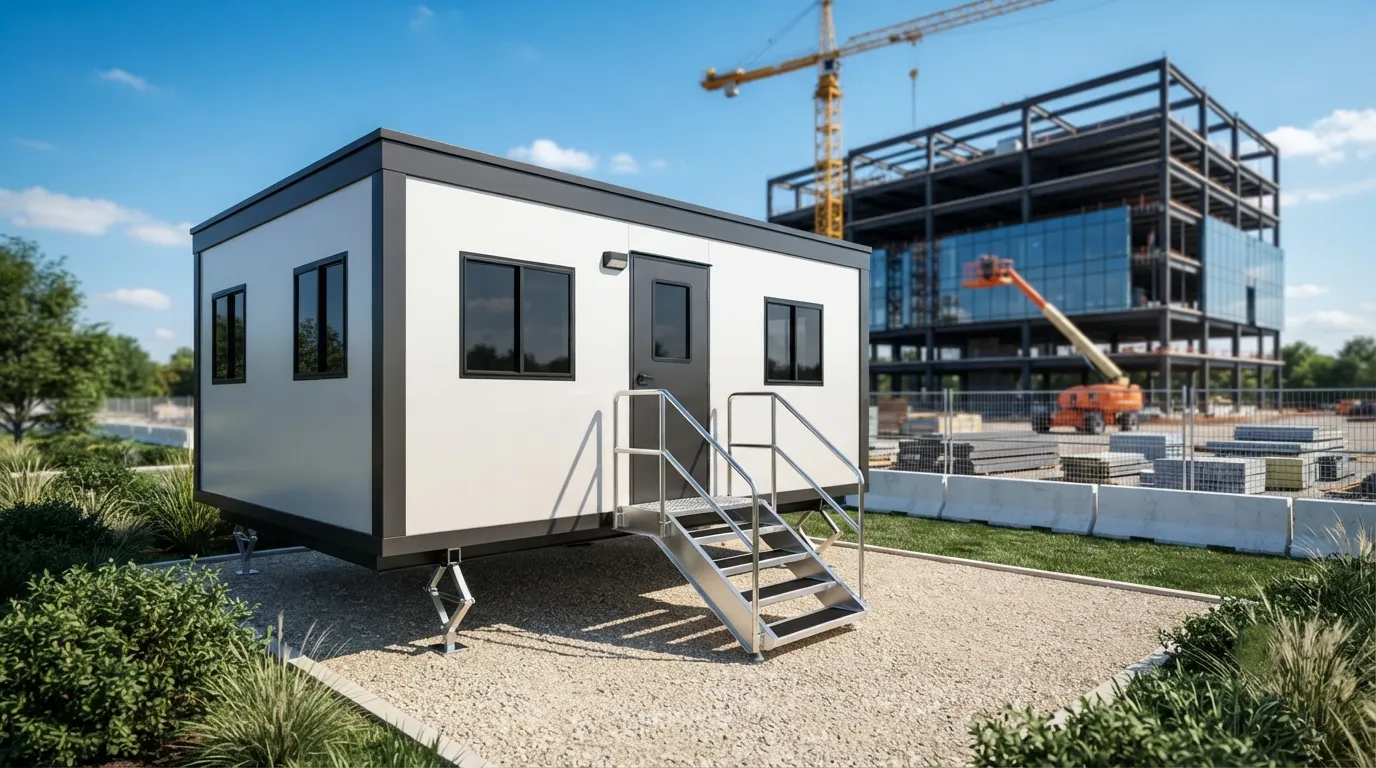
Put it near the work, but never in the path of equipment or the dumpster swing. A roll-off dumpster needs about 60 feet of straight clearance behind the truck for a clean drop, and that clearance zone should stay empty of porta potties, fencing, or stored material. Stage the toilet close to a stable access point, ideally on packed gravel or pavement, not soft dirt that ruts under foot traffic. If you're running temporary fencing around the perimeter, leave a gate wide enough for the pump truck's hose reach, usually within 100 feet of the tank. Lighting matters too: OSHA 1926.56(a) sets minimum illumination for work areas, so if the unit sits in a shadowed corner at dawn shifts, add a light tower. Housekeeping rules under OSHA 1926.25 mean the approach path has to stay clear of scrap and debris, which is as much about the toilet route as the work zone itself. For crews with a mobile office trailer on site, keep the toilet within a short walk of the trailer door, and check that trailer doors aren't blocked if you're dealing with worn hinges or old mobile office trailer replacement doors that stick and slow foot traffic during a shift change.
Do ADA units need special placement?
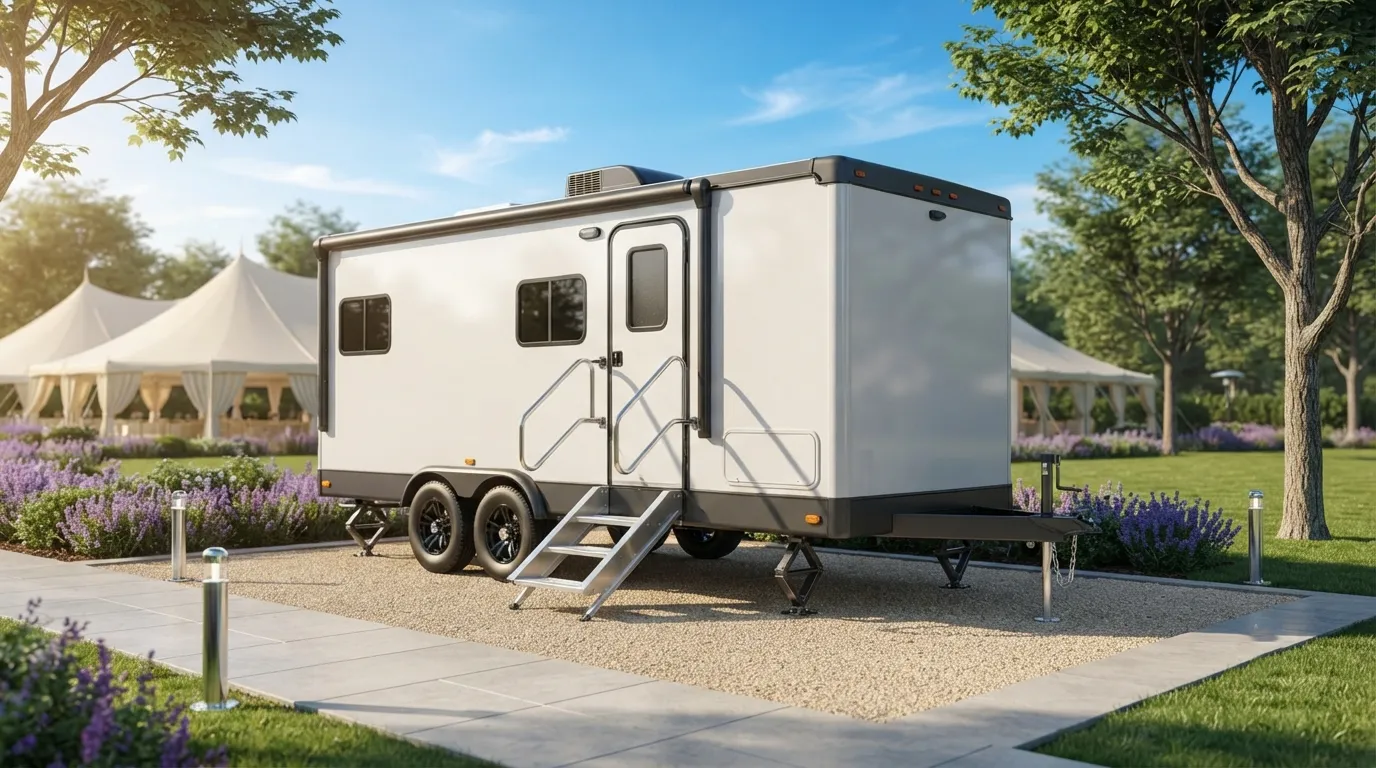
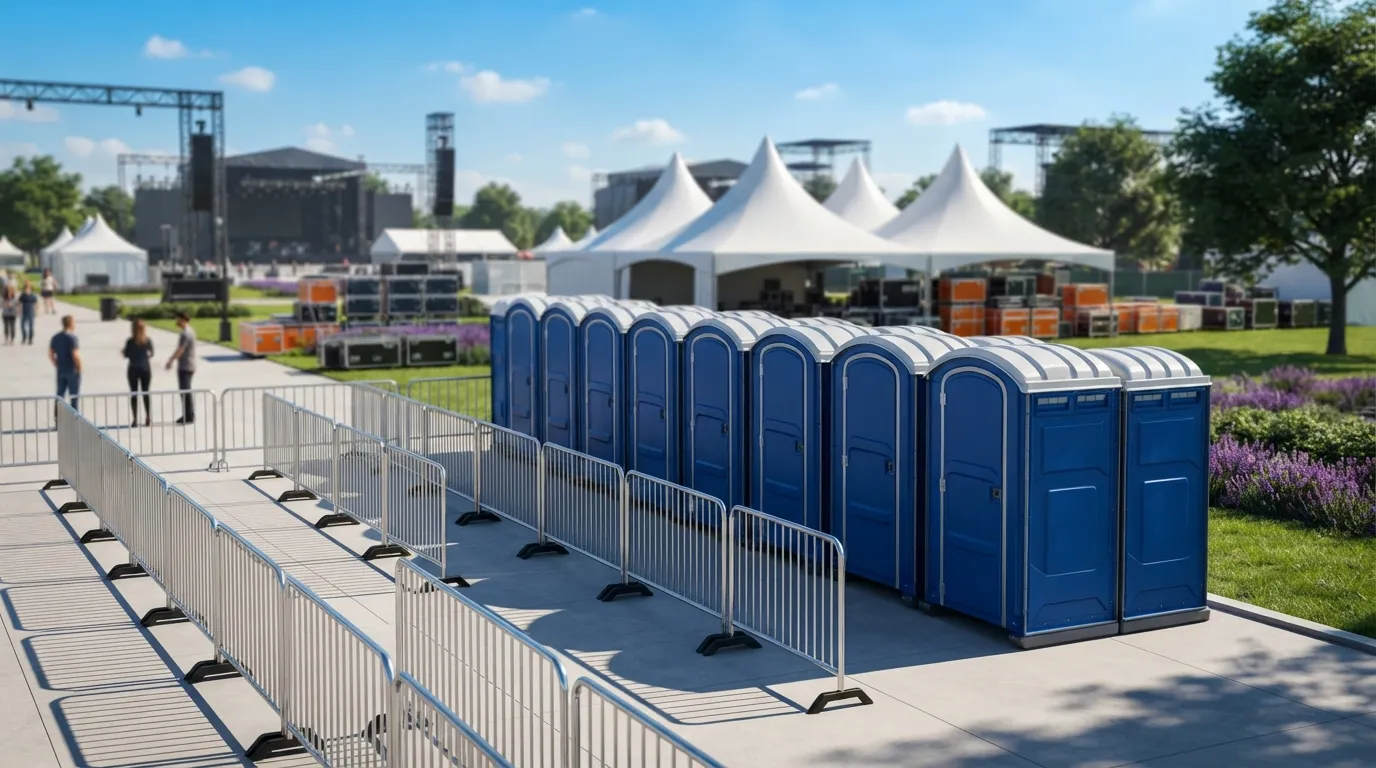
Yes. An ADA unit needs a 60 inch turning circle in front of the door per ADA Standards section 304.3.1, plus a clear approach at least 36 inches wide under section 403.5.1. The door opening itself has to clear 32 inches, per section 404.2.3, and reach controls should sit within the 48 inch high, 15 inch low range in section 308.2.1. Door hardware needs to operate with one hand and no more than 5 pounds of force, per section 309.4, which rules out stiff latches on older units. If you're clustering several toilets for an event or festival, ADA Standards section 213.2 requires at least 5 percent of the units be accessible, never fewer than one. That means if you've got a standard porta potty rental lineup of twelve units, one has to be an ADA accessible porta potty, placed on the flattest ground you've got, ideally at the end of the row closest to parking. A ramp serving that unit can't exceed a 1:12 slope under section 405.2.
Why does distance from the tank access point matter?
Because the pump truck has to reach the tank without driving over landscaping, curbs, or someone's septic field. On a septic pumping call, the same logic applies to residential tanks: a typical 1,000 gallon tank gets pumped every 3 to 5 years depending on household size, and the access lid needs to be reachable without digging through mulch beds every time. We've serviced properties well outside Greensboro proper, including jobs 9.3 miles northwest in Summerfield and 13.4 miles northwest in Oak Ridge, and the placement problem is always the same: hose reach, not distance to the site. For grease traps, the rule is different. A grease interceptor gets pumped once fats, oils, grease and solids hit 25 percent of the liquid depth, and that access point needs to stay clear of parked delivery trucks. If you're outside city limits and researching a placerville septic pumping service by comparison, the placement fundamentals don't change: flat ground, truck access, and a route that doesn't cross a drain field. For handwashing setups tied to food service or paint work, keep the station near the work but separate from the toilet, since OSHA 1926.51(f)(1) covers washing facilities specifically for paints, coatings, herbicides, and insecticides, not general use. If a station's pump or spigot breaks mid-job, we stock an ozark river portable sink replacement parts kit on the truck for common fixes so you're not waiting on a warranty part.
How much does a dumpster placement permit cost?
We don't set permit fees. That's set by the city, and it varies by dumpster placement permit type and whether it sits on private property or the right-of-way. Check dumpster permit requirements or call Greensboro's permitting office directly before delivery to confirm current cost and paperwork.
Can I place a porta potty on the street in Greensboro?
Only with permission, and placement in the public right-of-way needs confirming with the city before we deliver. Most residential jobs stay on the driveway or yard instead, which avoids the permit question entirely. Ask us during your quote request and we'll flag it.
How far from the house should a unit sit?
Far enough that odor and foot traffic don't bother anyone indoors, typically 10 to 15 feet from doors and windows. Keep it off septic drain fields entirely. Flat, stable ground matters more than exact distance.
What size pad does a standard unit need?
A standard unit measures about 44 by 48 inches on the ground and stands roughly 92 inches tall, so a pad slightly larger than that footprint, on level ground, is enough. Gravel, pavement, or packed dirt all work.
Do storage containers have placement rules too?
Similar rules apply: flat ground, truck access for the delivery, and clearance for the container doors to swing open fully. See storage container rental for size options and delivery specs before you pick a spot.
Next step
Get a delivery date
Tell us the address, the dates and the headcount. We size the order and confirm the route.