
How many restrooms does a farm crew need?
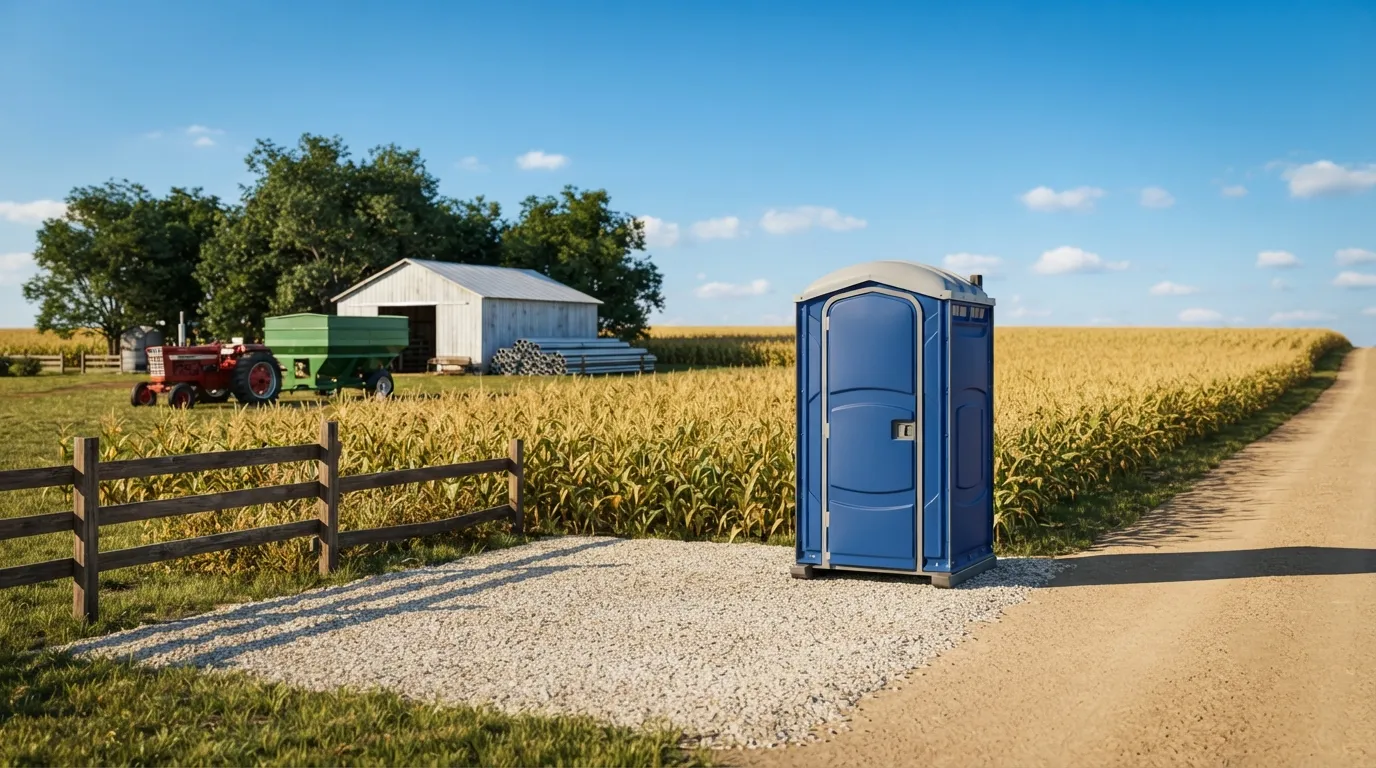
Start with the headcount and the walking distance, not the acreage. OSHA 1928.110 sets the field sanitation baseline at one facility per 20 hand-labor employees, and it has to sit within a quarter mile of wherever people are actually working, not just parked at the barn. A crew spread across two fields a half mile apart usually needs two units, not one moved back and forth. Potable water counts too: OSHA 1926.51(a)(1) requires an adequate supply wherever people work, and on a farm that often means a jug station next to the handwashing station rental rather than a hose bib nobody trusts. If you're not sure how many stalls a harvest crew, packing shed, and loading crew add up to, run the numbers on our how many porta potties do I need page before you order. Most farm accounts land on a standard porta potty rental at the day or week rate, then add units during peak harvest and drop back down after. We deliver from Greensboro to farm operations as far out as Burlington, 23.2 miles east, and Kernersville, 18.2 miles west, so distance from town rarely rules a job out.
What does it cost to rent a farm restroom in Greensboro?
Pricing depends mostly on how long the unit sits and how many you need at once, not on whether it's a farm or a construction site.
| unit | day | week | month |
|---|---|---|---|
| standard | $100 - $350 | $130 - $500 | $125 - $325 |
| ada | $200 - $400 | $240 - $400 | - |
| deluxe | $85 - $1,200 | $150 - $290 | - |
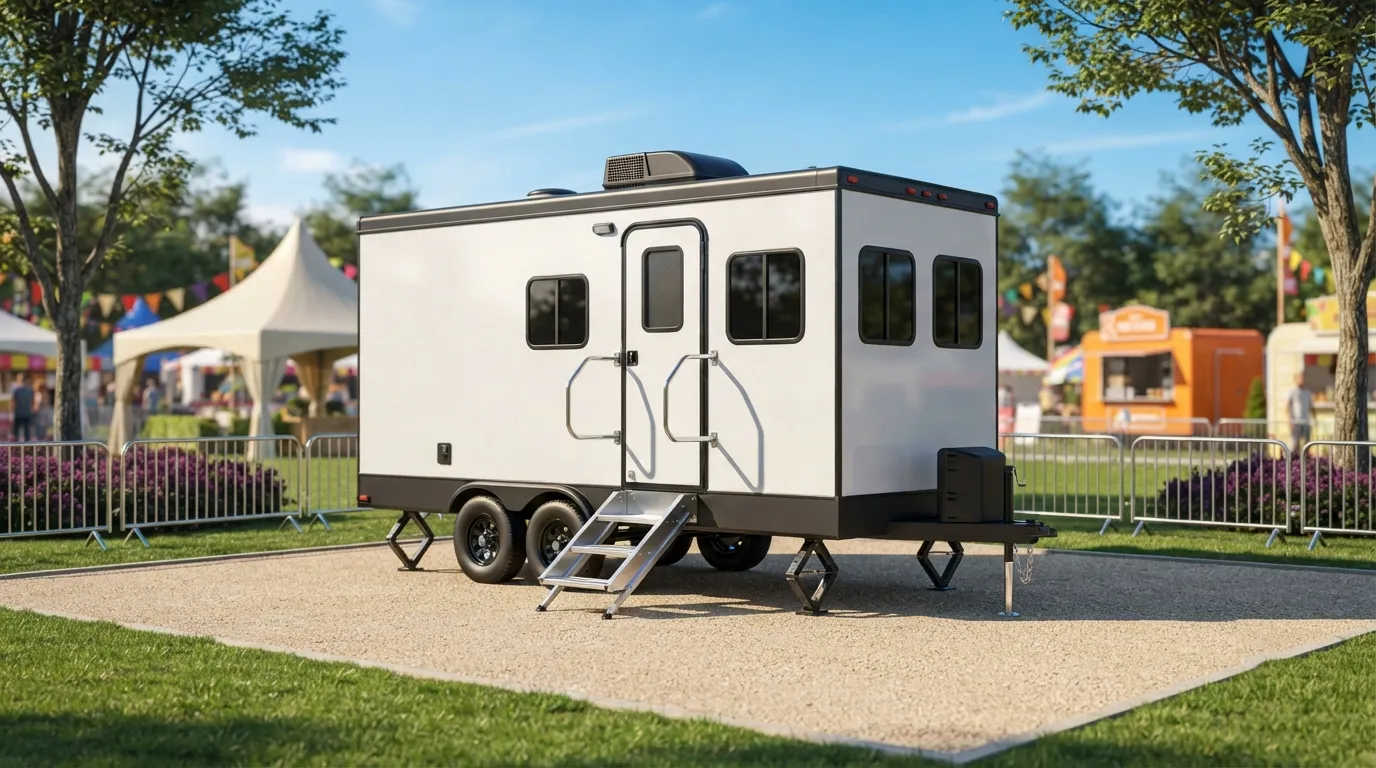
A standard unit rented for a single harvest day runs at the low end of that range; a season-long placement through planting or picking lands closer to the monthly figure. Add a delivery fee, which typically falls between $100 and $500 depending on how far out the field sits and how many trips the driver makes. If your crew includes anyone using a wheelchair or has mobility limits, an ADA accessible porta potty is worth the difference; ADA Standards 213.2 requires at least one accessible unit anytime portable toilets are clustered, and ADA Standards 304.3.1 calls for a 60 inch turning circle inside. For a full breakdown by rental length, check porta potty rental cost or the monthly porta potty rental page. Packing sheds and farm stores sometimes want something closer to indoor plumbing; a deluxe flushable porta potty or a 2 stall restroom trailer both handle that without a full septic hookup.
Do farm workers need handwashing stations too?
Yes, and it's separate from the toilet requirement. OSHA 1928.110 requires handwashing water for hand-labor employees alongside the toilets, and 29 CFR 1910.141(d)(2) specifies soap and towels or a hand-drying device, not just a bottle of sanitizer clipped to a fence post. A basic portable sink rental or handwashing station rental satisfies that without much extra setup time. If your operation is spraying pesticides or herbicides, this is where OSHA 1926.51(f)(1) comes in: it requires washing facilities specifically where herbicides, insecticides, or other contaminants are being applied, so a crew treating an orchard block needs a working sink close to the application area, not just at the barn. Farms running a packing operation that generates fryer or wash-water grease should also look at grease trap pumping separately from restroom planning. Some operations pair the restrooms with a hand sanitizer station rental as a supplement near equipment, but it doesn't replace the soap-and-towel setup 1910.141(d)(2) calls for. Greensboro Porta Pros services both together on most farm routes, since a truck already headed out to McLeansville or Oak Ridge can top off a handwash unit on the same stop as the toilet pump-out.
What about septic needs on the farmhouse or barn side?
Farm restrooms and the farmhouse septic system are two different problems, and mixing them up causes backups. A residential septic tank is typically pumped every 3 to 5 years, depending on tank size and household size, and that schedule doesn't change just because you've added portable units for seasonal labor. If the house or barn bathroom has been acting up, our septic tank warning signs page covers what to watch for, and septic pumping service covers what a call-out looks like. Farms running a roadside stand or agritourism operation sometimes need a holding tank rental instead of tying into an aging system. Rolling all of it, restrooms, septic, and cleanup, into one seasonal plan is easier than calling three vendors; our construction site services page shows how we structure that for larger operations, even though the crew here is picking apples instead of pouring concrete.
How far in advance should I book for harvest season?
A week's notice usually works for a standard delivery, but book earlier if you need multiple units across several fields. Greensboro Porta Pros trucks run routes out to Forest Oaks, 14.5 miles southeast, and Jamestown, 11.5 miles southwest, most weeks during peak season.
Can one unit serve two separate fields?
Not if they're more than a quarter mile apart. OSHA 1928.110 ties the placement to walking distance, so a crew split across distant fields needs a second unit rather than one shared restroom.
Do I need a permit to place a unit on farmland?
Placement on private agricultural land is usually straightforward, but anything near a public road or right of way needs checking with the city first. See our porta potty permit requirements page before delivery day.
What size unit fits a small orchard crew?
A standard unit works for most crews under 20 people. It holds a 60 to 70 gallon tank and measures about 44 by 48 inches on the ground, small enough to tuck at a field edge.
Does the rental include cleaning during a multi-week harvest?
Yes, service intervals follow the ANSI/PSAI Z4.3 baseline of one visit per week for up to 10 users. Heavier crews or longer harvests can add visits; ask when you book through request a quote.
Next step
Get a delivery date
Tell us the address, the dates and the headcount. We size the order and confirm the route.